Introduction
If you’ve ever tried making tortellini by hand, you know it’s a beautiful but painstaking process. Those tiny ring-shaped pasta pieces are delicate, perfectly folded, and packed with flavor. But for anyone looking to produce them faster, more consistently, or in larger numbers, the tortellinatrice is a game changer. This specialized machine bridges the gap between traditional pasta-making artistry and modern efficiency, making it easier than ever to enjoy high-quality tortellini at home or in a professional kitchen.
Whether you’re a home cook curious about authentic pasta or a professional chef aiming for consistent output, understanding the tortellinatrice can transform the way you prepare stuffed pasta.
What Is a Tortellinatrice?
The word tortellinatrice comes from Italian — combining “tortellini,” the beloved stuffed pasta, with the suffix -atrice, which denotes a machine that performs a specific action. Simply put, a tortellinatrice is a machine designed to automate the crafting of tortellini.
Instead of rolling dough, placing filling, folding each piece by hand, and sealing it one at a time, this machine streamlines the entire process. It ensures that every tortellini looks beautiful, cooks evenly, and tastes great, whether you’re producing a dozen pieces or thousands.
Tortellinatrice machines are used in everything from home kitchens to artisanal pasta shops and commercial production facilities.
How the Tortellinatrice Works
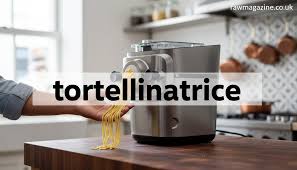
Understanding the process helps explain why this machine is so valuable for anyone making tortellinatrice.
Rolls the Dough
The first step is rolling fresh pasta dough into consistently thin sheets. Uniform thickness is crucial: too thick and the pasta becomes heavy; too thin and it can tear during filling or cooking.
Deposits the Filling
Next, the filling — whether ricotta, meat, or vegetables — is portioned and deposited onto the sheet at regular intervals. This ensures each tortellini has the right amount of filling and cooks evenly.
Folds and Seals
The machine then folds the dough around the filling and seals the edges to create the iconic ring shape. A strong seal prevents the tortellini from leaking or bursting during cooking.
Cuts and Ejects
Finally, the machine cuts each piece and collects the finished tortellini, ready for cooking, freezing, or drying. The result is uniform, perfectly formed pasta that saves time and effort.
Types of Tortellinatrice
Tortellinatrice machines vary in complexity, from manual devices to fully automatic systems.
Manual Models
Manual or hand-crank models are ideal for home kitchens. They allow full control over the process and are more affordable, but they require physical effort and are slower than powered options.
Semi-Automatic Machines
Semi-automatic machines handle filling and sealing while still requiring some manual dough feeding. They are perfect for small businesses or artisan pasta makers who want efficiency without industrial-scale investment.
Fully Automatic Industrial Machines
These machines are designed for commercial production. They can operate continuously, produce large volumes, and allow adjustable settings for dough thickness, filling size, and production speed.
Why Using a Tortellinatrice Makes Sense
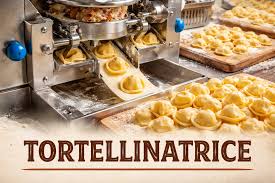
Speed and Efficiency
What might take hours by hand can be done in minutes with a tortellinatrice. Whether producing a small batch or mass quantities, the machine accelerates the process without sacrificing quality.
Consistency in Every Batch
Uniform size and shape affect both appearance and cooking. A tortellinatrice ensures each piece cooks evenly and looks professional, which is particularly important for restaurants or food businesses.
Reduced Labor and Waste
Manual pasta-making is labor-intensive. Automating key steps reduces effort, prevents fatigue, and minimizes filling waste through precise portioning.
Improved Hygiene
Less hand contact means improved food safety. Machines made from food-grade materials and easy-to-clean surfaces help maintain hygiene standards, essential for commercial kitchens.
Who Benefits Most from a Tortellinatrice
Home Cooks
Home cooks who love fresh pasta but lack hours to fold by hand can benefit from compact manual or semi-automatic machines. They allow for authentic results with minimal effort.
Small Restaurants and Trattorie
Small eateries serving fresh pasta regularly can maintain consistent quality, meet customer demand, and free staff for other tasks by using a tortellinatrice.
Commercial Producers
Large pasta producers gain efficiency, volume output, and quality control. Fully automatic machines are vital for scalability and profitability in high-volume production.
How to Use a Tortellinatrice: Best Practices
- Prepare Quality Dough and Filling
The machine is only as good as the ingredients. Use high-quality dough and fillings firm enough to maintain shape. - Calibrate Carefully
Test a few pieces first to adjust thickness, filling size, and sealing pressure. This prevents errors during large batches. - Maintain and Clean Promptly
Proper cleaning and maintenance prolong machine life and prevent flavor contamination. Choose a machine that is easy to disassemble and clean.
Conclusion
The tortellinatrice combines tradition and efficiency, allowing anyone to enjoy high-quality tortellini without hours of labor. From home kitchens to commercial pasta factories, it provides speed, consistency, hygiene, and ease of use. By automating the delicate art of tortellini making, the tortellinatrice is more than a machine — it’s a modern tool that preserves and enhances the culinary legacy of Italian stuffed pasta.
Frequently Asked Questions
- What does tortellinatrice mean?
It means “tortellini maker” — a machine designed to automate the making of tortellini. - Can a tortellinatrice make other types of pasta?
Some models can make similar stuffed pasta, like ravioli or cappelletti, with different settings or attachments. - Is a tortellinatrice worth it for home cooks?
Yes, especially if you frequently make stuffed pasta and want consistent results without manual folding. - How does a tortellinatrice improve hygiene?
By reducing direct hand contact with dough and filling, it helps maintain food safety standards. - What should I consider before buying one?
Consider production volume, space, budget, and whether you need manual, semi-automatic, or fully automatic capabilities.