In a time when environmental responsibility is no longer optional, innovative recycling concepts are gaining attention across industries and communities. One such emerging concept is matarecycler, a term increasingly associated with smarter, more efficient, and more sustainable approaches to managing waste. As global waste production continues to rise, systems that focus on recovery, reuse, and circular resource flow are becoming essential rather than experimental.
This article explores the idea of matarecycler in depth—its purpose, how it fits into modern sustainability efforts, the technology behind it, and why it matters for the future of waste management.
Understanding the Concept of Matarecycler
At its core, matarecycler represents an advanced recycling-oriented framework rather than a single machine or product. It combines material recovery principles, data-driven sorting, and sustainability-focused design to reduce landfill dependency and maximize resource reuse. Unlike traditional recycling systems that often rely on manual sorting and limited material recovery, this concept emphasizes automation, efficiency, and environmental impact reduction.
The idea behind matarecycler aligns closely with the circular economy model, where materials are continuously reused instead of discarded after a single lifecycle. This approach aims to transform waste from a problem into a valuable resource.
Why Modern Recycling Needs Innovation
Conventional recycling systems face multiple challenges: contamination, low recovery rates, lack of public participation, and high operational costs. Many recyclable materials still end up in landfills due to improper sorting or inefficient infrastructure.
The matarecycler approach addresses these issues by reimagining recycling as an integrated system rather than a standalone process. It focuses on smarter intake, better material recognition, and improved output quality, ensuring recovered materials are actually usable in manufacturing and production cycles.
As governments and organizations push toward stricter environmental goals, innovative recycling solutions are no longer a luxury—they are a necessity.
Key Components of a Matarecycler System
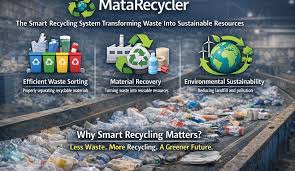
To understand how this concept functions in practice, it’s helpful to break it down into its major components.
1. Intelligent Material Sorting
One defining feature of matarecycler systems is advanced sorting capability. Using sensors, image recognition, and sometimes AI-assisted analysis, materials such as plastics, metals, glass, and composites can be identified and separated with high accuracy. This reduces contamination and increases the value of recycled output.
2. Modular Recycling Design
Rather than a one-size-fits-all facility, matarecycler systems are often modular. This means they can be scaled or customized based on location, waste volume, or material type. Urban centers, industrial zones, and rural areas can all adopt variations that fit their needs.
3. Data and Performance Monitoring
Modern recycling is as much about data as it is about machinery. A matarecycler framework often includes tracking systems that measure waste input, recovery rates, energy consumption, and emissions. This data allows operators to optimize processes and demonstrate environmental impact transparently.
4. Energy-Efficient Operations
Sustainability goes beyond recycling materials—it also includes reducing energy use. Many matarecycler concepts prioritize low-energy processing, heat recovery, and integration with renewable energy sources.
Environmental Benefits of Matarecycler
The environmental advantages of adopting a matarecycler approach are significant and long-lasting.
First, it dramatically reduces landfill waste by increasing the percentage of materials that can be successfully recycled. Second, it lowers demand for raw material extraction, which helps conserve natural resources and reduce habitat destruction. Third, it cuts greenhouse gas emissions associated with manufacturing products from virgin materials.
Over time, widespread adoption of advanced recycling systems could play a meaningful role in combating climate change and reducing pollution.
Economic and Social Impact
Beyond environmental benefits, matarecycler solutions also offer economic and social advantages.
From an economic perspective, improved recycling efficiency creates higher-quality secondary materials that can be sold back into manufacturing supply chains. This supports local industries and reduces reliance on imported raw materials.
Socially, modern recycling systems can create skilled jobs in system management, maintenance, data analysis, and environmental planning. Communities that invest in better waste solutions often experience improved public awareness and stronger environmental responsibility.
Matarecycler in Urban and Industrial Settings
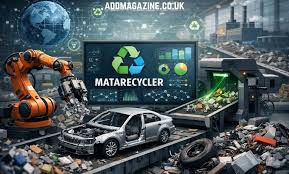
Urban areas generate massive amounts of waste daily, making them ideal environments for implementing matarecycler systems. Compact, high-capacity recycling units can be integrated into municipal infrastructure, reducing transportation costs and emissions.
In industrial settings, these systems can be tailored to specific waste streams such as packaging, production scrap, or electronic components. This targeted approach improves recovery rates and ensures materials are reintroduced into production cycles efficiently.
Challenges and Limitations
Despite its promise, the matarecycler concept is not without challenges. Initial setup costs can be high, especially when advanced technology and infrastructure upgrades are required. Additionally, successful implementation depends on proper waste segregation at the source, which still requires public education and participation.
Another challenge lies in adapting systems to handle complex or mixed materials that are difficult to recycle, such as multi-layer packaging or contaminated waste.
However, as technology improves and costs decrease, these barriers are expected to become less significant.
The Role of Innovation and Policy
Innovation alone cannot drive sustainable change. Supportive policies, incentives, and regulations play a critical role in encouraging the adoption of systems like matarecycler. Governments can accelerate progress through grants, recycling mandates, and public-private partnerships.
At the same time, ongoing research and development will continue to improve sorting accuracy, energy efficiency, and material recovery capabilities.
The Future Outlook of Matarecycler
Looking ahead, the future of recycling is likely to be smarter, cleaner, and more interconnected. The matarecycler concept fits naturally into smart city planning, where waste management systems communicate with other urban infrastructure such as energy grids and transportation networks.
As awareness of environmental issues grows, consumers and businesses alike are demanding better solutions. Advanced recycling frameworks could soon become standard practice rather than experimental initiatives.
Conclusion
The growing importance of sustainable waste management has created space for innovative concepts like matarecycler to emerge and evolve. By combining intelligent sorting, modular design, data-driven optimization, and environmental responsibility, this approach represents a meaningful shift in how society views and handles waste.
While challenges remain, the long-term benefits—environmental protection, economic opportunity, and social responsibility—make advanced recycling systems an essential part of a sustainable future. As technology and awareness continue to progress, models inspired by the matarecycler concept may play a central role in closing the loop between consumption and regeneration.