
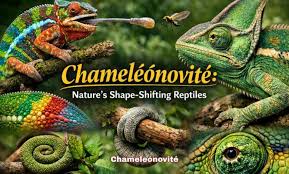
Chameleónovité, commonly known as chameleons, are among the most intriguing reptiles on Earth. Famous for their ability to change color, move their eyes independently, and capture prey with incredible speed, these creatures have fascinated scientists and nature lovers for centuries. This article explores their unique biology, behavior, habitat, and practical insights for anyone interested in understanding them more deeply.
What Are Chameleónovité?
Chameleónovité is the scientific family that includes all species of chameleons. These reptiles belong to the order Squamata, which also includes lizards and snakes. Most species are found in Africa, particularly Madagascar, though some also live in southern Europe, the Middle East, and parts of Asia.
Their reputation as color-changing animals is well known, but their physical and behavioral adaptations go far beyond that.
Unique Anatomical Features
Eyes That Work Independently
One of the most remarkable traits of chameleóovité is their eyes. Each eye can rotate and focus independently, allowing them to observe two different directions at the same time. This gives them a nearly 360-degree field of vision, helping them detect both prey and predators efficiently.
A Lightning-Fast Tongue
Chameleons possess an exceptionally long and powerful tongue. It can extend rapidly to capture prey in a fraction of a second. In some species, the tongue can be longer than the body itself, making it a highly effective hunting tool.
Specialized Feet and Tail
Their feet are uniquely adapted for gripping branches. The toes are fused into groups, forming a structure that works like pincers. In addition, many chamelenovité have prehensile tails that help them maintain balance and stability while climbing.
Color-Changing Ability
How Color Change Works
Contrary to popular belief, chamelenovité do not change color only for camouflage. Their skin contains specialized cells with pigments and microscopic crystals that reflect light. These cells respond to environmental factors such as temperature, light, and emotional state.
Why They Change Color
Color changes serve multiple purposes:
- Communication with other chameleons
- Regulation of body temperature
- Expression of mood or stress
- Camouflage when necessary
Bright colors may signal dominance or readiness to mate, while darker shades can indicate stress or discomfort.
Natural Habitat

Where Chameleónovité Live
The highest diversity of chameleónovité is found in Madagascar, home to more than half of all known species. They also inhabit tropical and subtropical regions across Africa, parts of Europe, and Asia.
Preferred Environments
Chameleónovité thrive in environments such as:
- Rainforests and jungles
- Shrublands and savannas
- Mountainous regions with moderate climates
They are primarily arboreal, meaning they spend most of their lives in trees and bushes.
Diet and Hunting Behavior
What Do Chameleónovité Eat?
Most chameleónovité are insectivores. Their diet typically includes:
- Flies
- Crickets
- Grasshoppers
- Spiders
Larger species may occasionally eat small birds or other reptiles.
Hunting Strategy
Chameleónovité are patient hunters. They often remain completely still, blending into their surroundings. When prey comes within range, they strike with incredible speed using their tongue, capturing it almost instantly.
Reproduction and Life Cycle
Reproductive Methods
Chameleónovité reproduce in two main ways:
- Egg-laying (oviparous species)
- Live birth (ovoviviparous species)
Females of egg-laying species bury their eggs in soil, where they incubate for several months. Some species give birth to live young, which is less common.
Development of Young
Newborn or newly hatched chameleons are fully independent from the start. There is no parental care, and they must immediately find food and avoid predators on their own.
Chameleónovité as Pets
Are They Suitable for Beginners?
While chameleónovité are visually stunning, they are not ideal for beginners. They require specific environmental conditions and careful attention to their needs.
Basic Care Requirements
Proper care includes:
- A vertical enclosure with branches for climbing
- UVB lighting for proper bone health
- Controlled humidity through regular misting
- A balanced diet with nutritional supplements
Without the right setup, chameleónovité can develop serious health problems.
Health and Common Issues

Common Health Problems
Chameleónovité are sensitive to their environment. Some common health issues include:
- Calcium deficiency
- Dehydration
- Respiratory infections
Most of these problems can be prevented with proper care, nutrition, and habitat management.
Interesting Facts About Chameleónovité
- Not all species change color dramatically
- Some of the smallest species are only a few centimeters long
- The largest species can grow up to 60 cm
- Their tongue movement is faster than the human eye can track
Role in the Ecosystem
Chameleónovité play an important role in maintaining ecological balance. By controlling insect populations, they help prevent overpopulation of pests. They also serve as prey for other animals, making them a vital part of the food chain.
Their presence often indicates a healthy environment, especially in forest ecosystems.
Conclusion
Chameleónovité are truly extraordinary creatures, combining unique physical adaptations with complex behaviors. From their independent eye movement to their remarkable color-changing ability, they represent one of nature’s most specialized reptile groups. Whether observed in the wild or studied in detail, they continue to capture human curiosity and admiration.
For anyone interested in reptiles or biodiversity, learning about chameleónovité offers valuable insights into how animals adapt and thrive in diverse environments.
FAQs
What does the term chameleónovité mean?
Chameleónovité is the scientific family name that includes all species of chameleons. It refers to a group of reptiles known for their unique adaptations and color-changing abilities.
Why do chameleons change color?
Chameleons change color for communication, temperature regulation, and emotional expression. It is not solely for camouflage as many people believe.
Are chameleónovité dangerous to humans?
No, chameleónovité are not dangerous. They are generally calm animals that avoid confrontation and pose no threat to humans.
How long do chameleónovité live?
Their lifespan varies by species, but most live between 3 to 10 years, depending on environmental conditions and care.
Is it difficult to keep a chameleon as a pet?
Yes, chameleónovité require precise care, including proper lighting, humidity, and diet. They are better suited for experienced reptile keepers rather than beginners.
